
Each year the United Nations’ International Day of Peace (IDP) officially takes place on September 21. To mark the occasion locally, members of MPG participated in a ceremony held in the Marrickville Peace Park (Richardson’s Lookout) on Saturday, September 16. Continue reading International Day of Peace – September 21
 Representatives of groups affiliated with the Independent and Peaceful Australia Network (IPAN) met in Melbourne over the weekend of September 8-10, 2017. (MPG is an affiliate of IPAN and was represented at the conference by Nick Deane.)
  A historic global agreement was reached at the United Nations headquarters in New York on Friday, July 7, 2017 when 122 nations adopted a treaty to ban nuclear weapons. Known officially as the Treaty on the Prohibition of Nuclear Weapons, it will acquire legal force once 50 nations have signed and ratified it.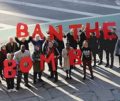


 The Australia Palestine Advocacy Network (APAN) has written to Foreign Minister Julie Bishop to express its dismay over her decision to invite Israeli Prime Minister Benjamin Netanyahu to Australia.
 The final report of the International People’s Tribunal (IPT) on crimes against humanity, committed by the Indonesian armed forces and civilian militias mainly between October 1965 and the early months of 1966, was released in The Hague on July 20, 2016. The report has called on the Indonesian government to investigate and prosecute all those involved in the deaths of more than 500,000 of its own citizens.1


 A forum entitled ‘Banning Nuclear Weapons: Labor’s Role’ was held on February 14 during the NSW Labor Conference in the Sydney. The forum was part of the conference’s Fringe Program and its purpose was to explore “how a future federal Labor government could lead the way” on banning nuclear weapons. However, the inconsistency between Labor’s current policy on banning nuclear weapons and its ongoing support for the US “nuclear umbrella” was strongly criticised.